
Charged or Under Investigation in British Columbia?
When the Crown Comes After You, You Want a Former Crown Prosecutor on Your Side.
Speak with Rob Dhanu, King's Counsel (a designation held by fewer than 7% of BC lawyers), former Federal Crown prosecutor with the Department of Justice, and a senior criminal defence lawyer who has argued cases at every level of court in British Columbia and all the way to the Supreme Court of Canada. Regular legal commentator for Global News, CBC, CKNW, and more. Frequent speaker and instructor, including for the RCMP search warrant course.
Featured on





A Strong Defence Starts by Listening
Criminal charges can impact your reputation, family, employment, sense of self, ability to travel, immigration status and your very freedom.
We listen first. We prepare relentlessly. We stand beside you at every stage: from first police contact through bail, trial, sentencing, and appeal.
We do not judge our clients. We do not over-promise.
You will get straight answers about what you are facing and what your options actually are.

What To Do In The First 24 Hours
If you have been arrested, released or even just contacted by police, your initial response can shape how your entire case will unfold.
Five things matter most:
01
Do not speak to police without legal advice.
You are not required to give a statement. Most people who try to "explain" their way out of a situation make things worse. You have a Charter-protected right to silence. Rely on your rights until you've spoken to a lawyer.
02
Write down what happened while it's fresh.
Times, locations, names, what was said, what you observed. Memory fades fast. A clear written record made today is one of the most useful things you can give your lawyer.
03
Do not post about it on social media.
Anything you write, even in private messages, can become evidence. Tell your closest people in person if you need to, but stay off Facebook, Instagram, TikTok, group chats, and text threads about the case.
04
Preserve everything.
Don't delete texts, photos, videos, or app messages, even the ones that look bad. Deletion can become its own problem. Save what you have and let your lawyer assess it.
05
Call a criminal defence lawyer before you do anything else.
Bail conditions, release undertakings, statement decisions, and early contact with police and Crown can all affect the rest of your case. Early advice is the most cost-effective and wise approach.
Speak with our criminal defence team today.
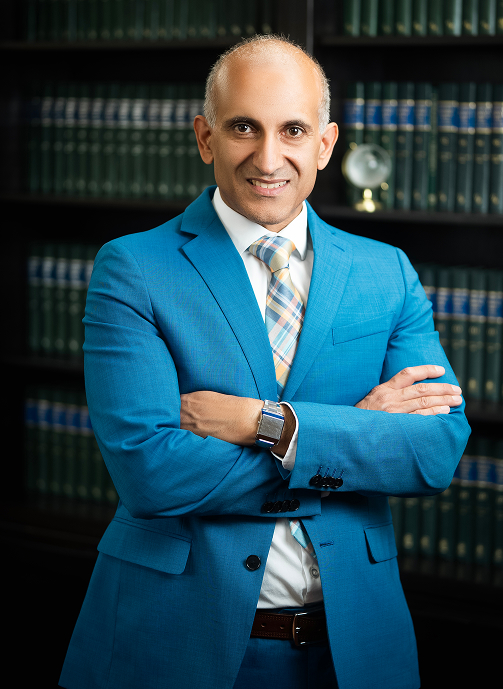
Rob Dhanu, K.C.
Founding Partner. King's Counsel. Former Federal Crown Prosecutor.
A Letter From Rob Dhanu, K.C.
I
f you're reading this, you're probably scared. You may not have slept much. You may not have even told your loved ones what's happening.
You're likely sitting there wondering how a few hours, or one bad decision, or one wrongful accusation, could take away your freedom, your job, your family, your name or your very sense of self.
I want to tell you a little about how I see the work I do, and how I see you, because I think it will help you decide what to do next.
I did not start out as a defence lawyer. I started on the other side. I was a Federal Crown prosecutor in the Downtown Eastside of Vancouver, the busiest courthouse west of Toronto. I was very good at building cases against accused persons and asking the court to send them to jail. I felt this was my calling, and I was making the world a better place.
However, the longer I spent at the Crown office, the more I realized there was a real human story behind every file that crossed my desk.
I noticed I was prosecuting the same people, again and again.
I would ask for jail, the judge would agree, the person would serve their time, and a few months later their name would be back on my desk. I had been taught that jail teaches a person their lesson. I was watching that not happen, over and over. I had become a cog in a revolving door system of justice that was ignoring people’s humanity and had a one-size-fits-all answer of jail for every accused, even though they were all so very different.
My time as a prosecutor made me realize the importance of understanding the person behind the charge and the story of why they were charged in the first place. It became clear to me that jail may be a necessary part of society, but jail does nothing to deal with the real reason someone is before the courts: whether it was addiction, mental health, relationship breakdown or any number of other reasons.
Don’t get me wrong, I still believe in our justice system. But I realized if I truly wanted to help people and make my community safer, I needed to position myself differently.
So I crossed the aisle.
A defence lawyer can do the thing that actually breaks the cycle: look at the whole person, not just the charge, and get them the help that changes where their life is heading.
Ironically, one of the first people I defended was a man I had personally sent to jail many times as a prosecutor. He told me he specifically wanted me as his lawyer because I had done such a good job putting him behind bars. This time, instead, I fought to get him into treatment. He stayed clean for five years. That may not sound like much, but it was easily the longest stretch of sobriety of his adult life.
The media usually portrays defence lawyers as guys who help guilty people get off scot-free. I sincerely believe I have kept my community safer as a defence lawyer by helping people deal with the life issues that brought them before the court in the first place than I ever did sending them to jail.
When you need someone in your corner, you should understand who will be standing next to you. Someone who can see your story from both sides of the courtroom. Someone who knows how Crown builds their case, because I used to build them. And someone who sees the person behind the charge and wants to know your full story.
So whatever you decide, don't sit alone with this. Talk to someone who can tell you where you really stand. Even if that conversation is the only one we ever have.
Sincerely,
Rob Dhanu, K.C.
How to Vet A Criminal Defence Lawyer In BC
Most People Have Never Hired a Criminal Lawyer Before. Here's How to Do It Properly.
When you are facing serious charges, you don't have time to learn the legal system from scratch. But you should know what to look for in a lawyer before you sign a retainer.
Three things separate experienced criminal defence counsel from everyone else:
1. Do they actually go to trial?
We are able to resolve most criminal matters before trial, whether through 1) plea negotiations 2) Crown stays of proceedings 3) protective orders with no criminal record.
But it is the lawyer who knows how to and does not fear going to trial who can negotiate the strongest resolutions. Ask your lawyer how many and what type of trials they have run.
2. Is there a written record of their work?
CanLII (the Canadian Legal Information Institute) is Canada's national legal database. Almost every reported court decision in the country is searchable on it by lawyer name. Many criminal defence lawyers, even experienced ones, do not have their cases reported in CanLII a single time.
That doesn't always mean they're inexperienced, but it does mean their work has not been tested at the level that requires judges to produce difficult written judgments in complex trials, Charter motions, and appeals.
Rob Dhanu, K.C. appears in more than 80 reported decisions on CanLII. You can verify this yourself by searching "Dhanu" at canlii.org.
3. Have they been recognized by the profession itself?
The King's Counsel designation in BC is conferred by the Attorney General after consultation with the Chief Justice of BC, the Chief Justice of the Supreme Court of BC, and senior members of the Law Society. Fewer than 4% of BC lawyers hold this designation today.
You want a former prosecutor who can tell you what is wrong with your case, not just what’s right with it.

About Rob Dhanu, K.C.
Most People Have Never Hired a Criminal Lawyer Before. Here's How to Do It Properly.
Rob Dhanu, K.C. began his career as a Federal Crown prosecutor with the Department of Justice in Vancouver, where he handled complex drug prosecutions, Charter litigation, search and seizure law, firearms offences, and organized crime matters.
He left the Crown to use his experience to defend individuals against the overwhelming might of the state. Rob realized he could have a far greater positive impact on individual lives and his community as a whole by understanding and addressing their real-life issues rather than relying on jail as a one-size-fits-all solution.
...it is the lawyer who knows how to and does not fear going to trial who can negotiate the strongest resolutions.
Using this approach, Rob has established a career as one of the most recognized criminal defence lawyers in British Columbia.
Credentials:
- Appointed King's Counsel by the Province of British Columbia — a designation held by fewer than 7% of BC lawyers today
- Former Federal Crown prosecutor — Department of Justice, Vancouver
- 80+ reported decisions on CanLII — trial judgments, Charter rulings, and appeals
- Has argued cases at every level of court in British Columbia, including the Supreme Court of Canada
Teaching and presenting:
- Instructor, RCMP Search Warrant Training Program — since 2012
- Has presented to the Canadian Senate, the International Commission of Jurists, the Justice Institute of British Columbia, the Canadian Bar Association, the Trial Lawyers Association of British Columbia, Continuing Legal Education BC, the South Asian Bar Association of BC, and Legal Aid BC
- Guest lecturer at the University of British Columbia's LLM program
Media Commentary
Rob is regularly interviewed by Global News, CBC, CKNW, and print outlets across Canada on the latest and most important criminal justice issues.

What a Publication Ban Means in the Tumbler Ridge School Shooting Case
A recent Global News report has raised difficult questions about transparency, public safety, and the role of the courts following.

Rob Dhanu KC on Global News: Firearms Seizures, Mental Health, and Public Safety in Canada
A recent segment on Global News examined disturbing new details emerging from the Tumblr Ridge mass shooting investigation.


What a Publication Ban Means in the Tumbler Ridge School Shooting Case
CBC Radio Transcript Program: The Early EditionHost: Stephen QuinnGuest: Rob Dhanu K.C., Criminal Defence Lawyer, Founding Partner at Dhanu Dhaliwal Law

Charges We Handle
No two cases are defended the same. Each case turns on different facts, different law, and different strengths and weaknesses. Here's how we approach the charges we see most often.
Sexual Offences
Sexual offence cases have become their own specialized area of law. That’s because courts can not only restrict you from telling your full side of the story, but they can also stop you from bringing in evidence to defend yourself.
That is because the law now tightly limits what your lawyer can bring forward about the person accusing you. Crucial evidence to support your defence such as text messages, social media posts, diaries, counseling files, and much more, requires formal court applications that need to be made before the trial even starts. These applications can be complicated and, if they're done poorly, you can lose your trial before it begins because you've lost access to the evidence that could clear your name.
Domestic and Intimate Partner Offences
In a domestic case, credibility between the two people is often everything.
Has your partner contacted police before? Did the police conclude that they were making frivolous claims? The Crown will not share this sort of vital information with you or your lawyer - your lawyer needs to go looking for it.
We've had files where a single line buried in the paperwork pointed to another investigation that contained this sort of evidence. We pulled it. It changed the case.
Online and Digital Crimes
When a case involves phones, messages, and online activity, the evidence is digital, and digital evidence is often misunderstood.
Information that looks gone, deleted from a phone, or never saved, can frequently still be recovered. And something showing up on your device does not mean you put it there. Files can land on a phone or computer in ways the owner never chose and never knew about.
Showing how something actually got there can be the whole defence. We work with digital experts who examine a device properly, instead of accepting the version the police present.
Dangerous and Impaired Driving
Driving cases are far more technical than people expect, and that is exactly where they are won or lost. The breath-testing machine the police used has to be maintained and calibrated correctly, and its logs and service records can be checked for failures.
Dangerous driving cases often come down to an expert report on speed, braking, and timing. When the Crown brings an expert, we can bring our own to challenge it, rather than letting their version stand as the only one.
Weapons and Firearms Offences
Two questions decide most firearms cases. First, how did the police find the weapon in the first place? If they found it during an unlawful stop or search, that evidence can be dismissed. Second, what can Crown prove about the weapon?
Firearms cases come with technical reports classifying the weapon and describing how it works. Rob is a licensed firearms owner who understands the mechanics, so a report can be read closely and challenged where it's wrong, including questions as basic as whether a firearm is actually prohibited or a discharge was even intentional.
Drug Offences
A drug case can look hopeless on its face. Undercover buys, surveillance, GPS tracking: it can seem like there's no way out. But looks can be deceiving. Even if a case seems overwhelming, that may not mean it’s actually strong. You want someone who knows how police investigations really run. Confidential informants can be tested. Tracking devices can be miscalibrated. Search warrants can be flawed. A case that looks airtight can quickly fall apart. Read more about cocaine and drug charges in BC.
Assault and Violent Offences
An accusation doesn’t equal an assault, and assault is often more gray than you might assume.
Fights can be consensual, and self-defence is a real and powerful defence. The law also lets you use reasonable force to protect yourself, though it also sets limits you need to understand, like the rule that once the danger has passed, your response has to stop too.
There's also the question of how serious an injury truly is. A bruise is not automatically "bodily harm," and a charge of aggravated assault requires a genuinely serious injury backed up with medical evidence. When the Crown's expert says that you caused an injury, there can be various other causes. That’s why we have our own experts to set the record straight.
Fraud, Embezzlement and Breach of Trust
A fraud case is a paper case. The whole thing comes down to documents like banking records, transactions, expense reports, ledgers, and the Crown reads them one way. We bring in forensic accountants who can read the same paper and show the court a very different picture.
A signature can be challenged with handwriting analysis. A pattern that looks like fraud is often something else when you actually examine it, like a misunderstanding, a bookkeeping error, or a business decision someone has reframed in the worst possible light. These charges are also serious in ways that go beyond the courtroom. A fraud conviction can end a career, a professional licence, and a reputation built over decades. That is part of why we treat them as carefully as we do.
Theft, Robbery and Property Offences
A theft case usually rests on what someone saw, what a camera caught, what was found where, and what you said to police when they showed up.
Every piece of that can be picked apart and questioned. And in a lot of property cases, the real question is whether any crime happened at all. You may have been accused of breaking into a home you had every right to enter, which we see all the time in family and property disputes. You may have had a legal right to take back your own belongings, which is not theft.
Being convicted of assault may not stop you from getting a job where being convicted of fraud will. That’s because theft is considered a crime of “dishonesty” which can have serious implications for your employment, professional licensing, and immigration status.
Negotiating a resolution through options such as diversion or alternative measures can greatly reduce risk, cost and stress while getting your life back on track.
Murder and Homicide
A homicide charge is the most serious a person can face, and these cases are layered and complex. The goal may be a full acquittal, or it may be reducing the charge to something that carries a far different outcome for your life.
Many of these cases are defended with expert evidence.
- What was the true cause of death?
- Could a firearm have discharged by accident?
- If several people are involved, did each of them know that someone was going to get hurt?
We bring the expertise and the right experts for the facts of your case.
Other Criminal Matters
If your charge isn't listed here, that doesn't mean we can't help. We handle every type of criminal case and many regulatory offences.
The fastest way to find out where you stand is to call us at 604-746-3330 if you are unsure whether your situation fits one of these categories. Our team will let you know whether we are the right fit for your matter. If we’re not, we have a referral network of other professionals that we trust and can vouch for.
A Case That Changed Canadian Law
Closing a dangerous Charter loophole
In 2023, we argued the case of R. v. Zacharias before the Supreme Court of Canada. Prior to that, courts across Canada disagreed about whether police could violate your rights, find evidence arising from that very violation, and then use that same unlawfully obtained evidence to build grounds to arrest you. In fact, in British Columbia, unlawfully obtained evidence could be used to arrest you.
We argued that the Charter cannot work that way. The Supreme Court agreed. Evidence obtained through a Charter breach cannot be used to justify a warrantless arrest. That helps deter police “fishing expeditions”, unlawful searches in the hope that some evidence turns up. Thanks to Zacharias, police can no longer turn violations of your rights into grounds for an arrest and even more searches.
This was an extremely important development upholding Charter rights for all Canadians. But the court went even further, confirming that judges must consider the full chain of Charter breaches when deciding whether unlawfully obtained evidence should be excluded at trial.

01
The situation
Mr. Zacharias was pulled over by police for tinted windows and a burnt-out taillight. But a routine motor vehicle stop soon turned unlawful as police handcuffed Mr. Zacharias, placed him in the back of a police cruiser and conducted an unlawful search of his vehicle to uncover evidence they then used to arrest him.
02
The legal issue
The police can't just push you up against the wall, reach their hands in your pockets, and then say "hey we found some drugs, you're under arrest!".
Prior to Zacharias, courts across Canada disagreed as to whether police could arrest someone based on evidence they uncovered by violating their Charter rights. This was a fundamental question as to whether police should be allowed to arrest someone based on evidence they obtained unlawfully or whether the Charter prohibited police from being rewarded for violating important Charter rights.
03
Rob's argument
Rob argued that the Charter should not reward "fishing expeditions" by the police.
It would be an absurdity if the Charter incentivized police to turn a blind eye to potential violations of Charter rights in the hopes that they could uncover some evidence to use against the very person whose rights they were violating.
Further, all of the Charter violations that resulted from the initial violation, or the entire chain of events, should be considered by our courts when determining whether evidence should not be allowed to be used at trial.
04
What changed
The Supreme Court of Canada found that police could not use unlawfully obtained evidence to help them form the grounds to arrest someone. Further, the Supreme Court of Canada ruled that any violations of Charter rights that were linked to the initial unlawful actions of the police could be considered by a trial judge to determine whether evidence should be excluded from trial.
05
What it says about Rob
There is only one type of job protected by the Charter, that of the criminal defence lawyer. Rob understands the importance of protecting our sacred Charter rights in the David versus Goliath battle against the state. Rob didn't take this case all the way to Ottawa because it was easy, he took it because it was the right thing to do.

"For a year and a half I dealt with Dhanu Dhaliwal Law Group. I would recommend this law group to everyone
— especially Rebecca Gill. She minimized my stress at every turn and had a great defence for everything. From 11 charges and 4 mandatory minimum sentences down to 4. Fantastic job."
— B.D.
He Knows How the Crown Builds a Case.
That's Why He Can Take It Apart.
The Advantage of Having Been on the Other Side
When you're charged with a crime, the Crown hands your lawyer a stack of paper called “disclosure”. It's the case against you. It includes:

01
Police Reports


02
Officer’s Notes


03
Witness Statements


04
Other Relevant Documents

Most lawyers read it, work with it, and build your defence from it.
Here's what can be missed. A police investigation generates far more information than what ends up in that stack. The Crown only has to give you what relates directly to your charge. The rest (and there is often a lot of it) stays out of sight.
In fact, we commonly find the smoking gun is often something the disclosure left out.

Before Rob Dhanu, K.C. (King’s Counsel), defended people, he prosecuted them as a Federal Crown prosecutor (this is the Canadian term for what many movies refer to as “the prosecution”).
The prosecution (the crown) has a playbook they are obligated to follow. This set of rules has its own strengths and weaknesses, but only someone who’s worked for the crown knows what that playbook is.
Rob knows how to spot the clues and breadcrumbs left in disclosure to see what’s missing. For example, we commonly request access to things like:
- The police database that shows the person accusing you has a history of complaints that went nowhere.
- Older investigation files reveal that the person accusing you once gave police a statement that police themselves found to be false.
- The maintenance logs for the tracking device or breathalyzer used against you that proves the equipment was never calibrated properly.
If that sort of evidence for you exists, none of it is handed over by default. Someone has to know to go looking for it.
This matters most with how the police get their evidence against you in the first place.
For example, take a search warrant: the document that lets police legally into your home, your car or your phone.
Here's how a search warrant gets approved:
01
A police officer writes up the request.
A police officer writes up the request. They're supposed to follow strict rules about what can go into their request, because this document is what justifies entering your private space. Then they bring it to a judge for approval.
02
And here's the part most people don't know.
No one is there to argue your side. The judge hears only from the police. They have a stack of other files and often only minutes to read the request before deciding. So if the officer cut a corner, broke one of those rules, or left something out, there's a good chance no one catches it in that room. The warrant gets signed. The police are at your door.
03
But it doesn't end there.
That warrant can be challenged later, by your lawyer, line by line. And if it wasn't properly written or properly granted, the evidence the police found with it can be thrown out. Sometimes that's the whole case. No evidence, no conviction.
Catching that takes a lawyer who knows exactly what a warrant should contain. The basics of what a search warrant is get taught in law school. The rules and procedures that actually decide cases do not.
Here's where Rob is different: he doesn't just know the rules for search warrants. He teaches them.
Every year, he helps train RCMP officers on how to execute search warrants. He knows what a proper one looks like, which means he knows how to spot one that isn't.
These are just a few examples (and there are many more) where having played for the prosecution makes Rob and his team of criminal lawyers far more effective in mounting your defense.
The DD Law Criminal Defence Team
When you call DD Law, you get the entire team, not just a lone wolf with a busy calendar.

The DD Law Criminal Defence Team
When you call DD Law, you get the entire team, not just a lone wolf with a busy calendar.
Rob Dhanu, K.C.
Founding Partner. King's Counsel. Former Federal Crown Prosecutor.
Rebecca Gill
Criminal defence lawyer.
Nicholas Bilof
Criminal defence lawyer.
Sarbi Bassi
Civil forfeiture.
Navneet Basran
Criminal team lead assistant.
What Our Clients Say
"After a 2.5-year battle with the court system Rob Dhanu was able to get me the best possible outcome.
I have had nothing but great experiences with Rob and the staff at Dhanu Dhaliwal Law Group and would recommend them to everyone. I never got the feeling like I was being misled in any way. I was always given great advice and felt as if Rob was going above and beyond to fight for me."
— D.T.

"For a year and a half I dealt with Dhanu Dhaliwal Law Group. I would recommend this law group to everyone
— especially Rebecca Gill. She minimized my stress at every turn and had a great defence for everything. From 11 charges and 4 mandatory minimum sentences down to 4. Fantastic job."
— B.D.
"After a 2.5-year battle with the court system Rob Dhanu was able to get me the best possible outcome.
I have had nothing but great experiences with Rob and the staff at Dhanu Dhaliwal Law Group and would recommend them to everyone. I never got the feeling like I was being misled in any way. I was always given great advice and felt as if Rob was going above and beyond to fight for me."
— B.D.
"I can honestly say that Rob changed the course of my life.
Not only did he get me bail when I thought it was impossible, he exposed me to programs that put me on a totally different path than I was before. Rob always gave me straight talk, good advice and the direction I needed in my life."
— B.A.
Recent Media Commentary

4 months ago
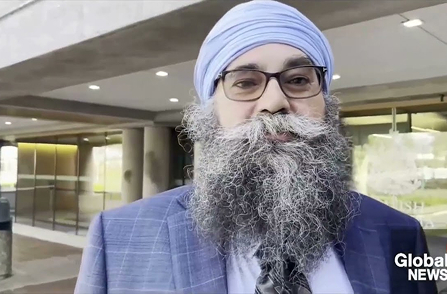
Rob Dhanu KC on Global News:
Firearms Seizures, Mental Health, and Public Safety in Canada
A recent segment on Global News examined disturbing new details emerging from the Tumblr Ridge mass shooting investigation. Social media posts from a now removed Reddit account allegedly linked to…
4 months ago
Surrey Tractor Protest Case Delayed: Rob Dhanu, K.C. Explains What Happens Next
A criminal case arising from a tractor incident during an anti SOGI protest in Surrey has been delayed after defence counsel fell ill, pushing the matter closer to the constitutional…
8 months ago
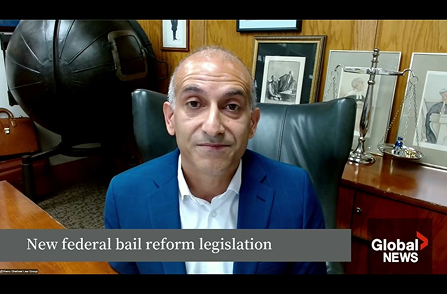
Rob Dhanu KC on Global News: The Truth About Canada’s New Bail Reform
The federal government has introduced a sweeping Bail and Sentencing Reform Act, promising to keep violent and repeat offenders behind bars and make it harder to get bail. To unpack…
8 months ago
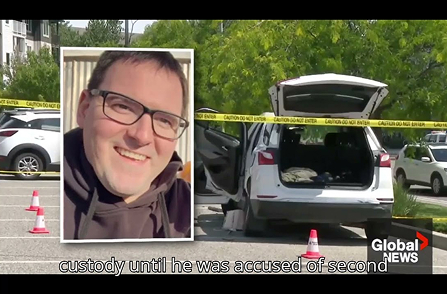
Rob Dhanu KC Analyzes Mark Carney’s Bail Reform on Global News
A criminal case arising from a tractor incident during an anti SOGI protest in Surrey has been delayed after defence counsel fell ill, pushing the matter closer to the constitutional…
About Your Consultation
We do not offer free consultations for a very good reason
You are wasting precious time if your first meeting with a lawyer is just a low-substance sales pitch.
It is absolutely vital that you understand what you are facing as soon as possible so you can immediately begin preserving crucial evidence, understand how to deal with police and proactively map out your defence. We get to know you and your situation in detail, identify immediate risks and priorities, explain the process and create a sensible roadmap to move forward. Your paid consult may be the best investment you ever make.
By the end of the consultation, you will know:
What you are actually facing in terms of charges and jeopardy
What any undertaking or bail conditions mean and how to change them
How the system actually works from the perspective of Crown and the defence
What evidence you need to save, what evidence you need to find, which witnesses can help you and what resources you should begin accessing
What steps we will be taking to defend you
If it turns out you don't need a lawyer, we will tell you that. Sometimes the answer is simply “you don’t need a lawyer right now”.
We charge for that work because it is real legal advice that is going to help you, not a sales conversation to get you in the door. We can say with pride that almost every client decides we are the right choice to guide and defend them after our first meeting.
At a minimum, you will walk away with a much clearer picture of your situation.
Book a confidential consultation with Rob Dhanu, K.C. and the DD Law criminal defence team.

"I can honestly say that Rob changed the course of my life.
Not only did he get me bail when I thought it was impossible, he exposed me to programs that put me on a totally different path than I was before. Rob always gave me straight talk, good advice and the direction I needed in my life."
— B.A.
Don't Speak to Police
Before You Speak to Us.
Whether you are under investigation, have been arrested or are facing an upcoming court date, your very first decision about who will be fighting for you can shape the entire outcome of your case.
Or use the form — your inquiry is confidential and reviewed directly by our criminal defence team.